The jock tax is a big deal when it hits your bank account. For many pros, their prime earning time is short. One injury or roster move can change everything. This makes managing cash flow and taxes a big part of the job.
So, what is the jock tax? It’s a rule that makes you owe income tax in states where you play, even if you don’t live there. This is why professional athlete taxes are different from a typical W-2 paycheck.

The pressure is real. An estimated 75% of NFL players face financial stress within two years of retirement. And 60% of NBA players are broke within five years. Taxes, travel, and high expectations can add up quickly, making small mistakes costly.
For athletes dealing with short careers and multi-state taxes, working with a sports accounting advisor who understands athlete taxes can be the difference between keeping wealth and watching it disappear.
This guide explains the jock tax in simple terms. You’ll learn how duty days affect what you owe. You’ll also see how jock tax varies by state and how to avoid overpaying and reduce filing risk.
Key Takeaways
- The jock tax can create tax bills in multiple states during a single season.
- Understanding what is jock tax helps protect cash flow in a short peak-earning window.
- Professional athlete taxes often involve more than salary, including bonuses and endorsements.
- Multi-state tax filing for athletes can mean several returns, deadlines, and withholding rules.
- Duty days can affect how income is allocated between home and away jurisdictions.
- Better planning can reduce overpayment, penalties, and compliance headaches.
What the jock tax is and why it applies to professional athletes
Ever wondered about the jock tax? It’s not a penalty, but a rule about where you work. If a player makes money in a state, that state might take a part of it. This is why athletes pay taxes in places that aren’t their home.
Teams, agents, and tax experts use schedules and records to figure it out. They aim to match income with the state where the work was done. This way, they avoid surprises when it’s time to file taxes.
Paying state income tax where you “work” (play)
The jock tax is simple: athletes pay taxes in the state where they play, practice, or have team events. It’s like taxes for any worker who travels, but athletes move more and are seen more. Some places also add local taxes on top of state taxes.
Why athletes are uniquely exposed: frequent travel + multiple taxing jurisdictions
Pro athletes’ schedules mean they face taxes in many places. One trip can lead to taxes in several states. This adds up over a season, even if they don’t change where they live.
- Regular-season travel across state lines
- Postseason games and media days
- Team-required appearances tied to a location
The “duty days” concept: allocating income across practice, travel, and game days
States use duty days to figure out how much income to tax. This includes game days, practice, travel, and other team activities. A small mistake in the calendar can change how much tax is owed.
Having clear records is key. Schedules, flight logs, and reports help prove how income is split. This way, athletes can avoid paying too much or too little in taxes.
How the jock tax can change your real take-home pay during a short peak-earning window
Multi-state taxes can cut into savings during peak earning years. Even with withholding, the final amount can vary. Planning for these taxes helps keep a steady budget and prevents unexpected expenses.
How much is the jock tax and what drives the total cost
To figure out the jock tax, consider where you played, how many days you were there, and how each place taxes income. Most states use a duty-days approach. This means income is split among games, practices, travel days, and other team duties.
The jock tax rate varies. It depends on each state’s rules, your income, and how your pay is split during the season.

Key cost variables
- Away games and taxable days in each state, including practices, shootarounds, and required travel.
- State income tax rates and any city or local taxes that stack on top of them.
- Total compensation, as higher pay increases the impact of each extra filing state.
- Allocation method, usually duty days, which determines the share of income sourced to each location.
Two players on the same team can face different costs. Their schedules, minutes of obligation, and contract details can change the effective cost.
Income types that may be impacted
Game checks are just the beginning. Deals also include signing bonuses, incentives, playoff shares, appearance fees, and licensing income.
Endorsement work can also lead to endorsements tax in a taxing state. A commercial shoot, in-person promo, or store appearance may source income differently than royalty-style payments. So, the paperwork needs clear support.
Why multi-state compliance adds complexity
Multi-state compliance means filing in 10–20+ states in a season for frequent travelers. Each return needs its own allocation schedule, withholding review, and documentation for duty days.
This workload is a real cost center. Good records help avoid penalties, missed credits, or overpaying because income was sourced to the wrong place.
Why tax strategy matters for long-term security
Timing is key because careers are short. The average NFL career is about 3.3 years, and NBA careers last about 4.5 years. Many athletes retire before 30.
Athlete tax planning starts with understanding how tax is computed. Deductions reduce taxable income, while credits reduce taxes owed dollar-for-dollar. The IRS applies your tax bracket to an income range.
For tax year 2025, the standard deduction is $15,750 (single), $31,500 (married filing jointly), and $23,625 (head of household). The law change signed July 4, 2025, also raised the SALT cap from $10,000 to $40,000 for income up to $500,000. This increase is temporary through 2029.
This is why many pros choose to work with an athlete tax advisor focused on multi-state and jock tax planning, not a general CPA.
jock tax by state: what to expect when you play on the road in the United States
Your paycheck can be taxed in more than one place during the season. Each trip can lead to a nonresident return if you earned income there. The tax is usually based on how much pay is tied to that state through duty days.
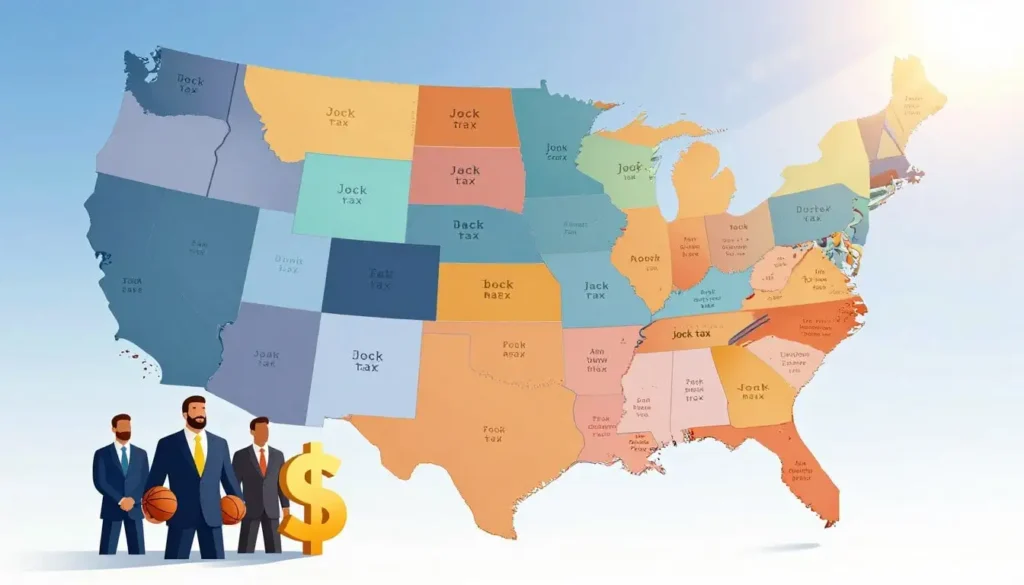
States with personal income tax can take a big chunk of your earnings. Some cities and counties add local taxes too. This is why state income tax rates for athletes matter, even for short visits.
Away game tax rules are complex but designed for consistency. Your goal is to follow the same process every week. This ensures withholdings, allocations, and filings match the team schedule.
- Keep travel calendars, team schedules, and any league-provided itineraries in one place.
- Save pay statements and contract breakdowns so allocations match compensation types.
- Use consistent duty days tracking for practice days, travel days, and game days.
The compliance load adds up fast. A full schedule can push filings into the 10–20+ state range for frequent travelers. This is even more true when local taxes apply. Keeping records clean helps avoid missed returns, reduces rework, and supports your numbers if a state asks questions.
Federal planning can also shape the net cost. If you itemize, the SALT deduction may allow state and local income (or sales) taxes plus property taxes. But there are limits. The cap rose to $40,000 for income up to $500,000, phases out above $500,000, and is increased through 2029.
Each year you choose either the standard deduction or itemized deductions, not both. For athletes dealing with jock tax states, this choice can impact your federal taxes. Strong documentation and steady duty days tracking make the math cleaner when state income tax rates for athletes and away game tax rules collide across the schedule.
Conclusion
So, what is jock tax in real terms? It’s a tax on athletes’ income, based on where they work. This tax is different in each state and sometimes in cities too. It can really cut into how much money athletes take home.
How much jock tax an athlete pays depends on their schedule and income. Athletes who travel a lot might have to file taxes in many states. This can add up quickly, making it hard to save for the future.
For athletes, the stakes are high. Many face financial trouble soon after they retire. This is why managing taxes is so important. A good strategy can help athletes keep more of their earnings.
To manage jock tax, athletes need to track their work and travel. They should also plan for taxes in multiple states early on. By doing this, they can save more money for after their sports career.
FAQ
What is jock tax?
The jock tax is not a special penalty or extra fee. It’s how states (and sometimes cities) tax a visiting athlete’s income. This income is tied to games, practices, travel, and other team duties in their jurisdiction. It works like any traveling worker’s tax, except athletes do it across many states in one season.
Why does the jock tax hit pro athletes harder than most workers?
Athletes travel a lot for games and events. This means they trigger tax filing and withholding in many places. Their peak earnings are short, often 5–10 years around ages 25–35. One injury or performance drop can end their earning window fast. Taxes compete with saving and investing during these critical years.
How is the jock tax calculated at a high level?
Most states use duty days to allocate income. Taxable pay is divided based on workdays in each state versus total duty days. Then, the state applies its nonresident income tax rules to the portion sourced there.
What are “duty days,” and why do they matter?
A: Duty days are days spent on team work—practice, meetings, travel, games, and rehab. They matter because a state can tax you based on time spent working there, not just game days. Keeping accurate calendars and itineraries is key for correct allocation.
How much is the jock tax?
The jock tax amount depends on your travel schedule and where you play. It’s influenced by away games, taxable days, state income tax rates, local taxes, total compensation, and duty day allocation. Frequent travel can turn small state-level percentages into big dollars withheld and owed.
What factors determine an athlete’s total jock tax cost in a season?
The total cost is influenced by away games, state income tax rates, local taxes, total compensation, and duty day allocation. Even one extra appearance in a high-tax jurisdiction can change your year-end balance.
Which types of income can be affected by the jock tax?
Athlete income includes salary, signing bonuses, performance incentives, endorsements, and appearance fees. The jock tax applies when income is tied to services performed in a state. Tax treatment varies based on contract structure and where work happens.
What does “jock tax by state” mean in practice?
A: Jock tax by state means each state you work in may require a nonresident state tax return for income sourced there. It’s about tracking where you worked and coordinating multi-state filings on a single timeline.
Do all states apply a jock tax?
Not every state imposes the same jock tax. Some states tax income from away games and related duty days. Others add local taxes on top. This means athletes face different tax rules across states.
How many state tax returns might a pro athlete need to file?
Frequent travelers may need to file in 10–20+ states in a season. This includes away games, appearances, and other taxable days. Even with withholding, filing is often required to reconcile what was withheld versus owed.
Why is jock tax compliance considered a cost center?
The cost isn’t just the tax itself. It’s the time and precision needed to track duty days, collect documentation, and file correctly across jurisdictions. Errors can lead to penalties, interest, missed credits, or overpayment, hurting cash flow during a short earning window.
How does the jock tax affect take-home pay and long-term wealth planning?
Multi-state taxes can reduce cash available for saving and investing during peak earning years. Athletes often aim to save 50%+ of take-home pay. With short careers and long retirements, this is critical for long-term wealth.
Why is understanding taxes higher-stakes for athletes than for most high earners?
Athletes face extreme tax liabilities and lifestyle pressures that can erode wealth quickly. A single injury or roster change can cut income abruptly. This leaves little room for surprise tax bills, leading to financial stress.
What records should athletes keep to support duty-day allocations?
Keep travel calendars, team schedules, itineraries, game logs, practice dates, and any documentation of mandatory team activities by location. Pair that with a clear breakdown of pay types—salary, bonuses, endorsements, and appearance fees—to ensure correct reporting.
What’s the difference between a tax deduction and a tax credit?
A deduction reduces taxable income, lowering your tax bracket. A credit directly reduces taxes owed. The IRS calculates taxable income as reported income minus deductions, applying your bracket to an income range, not your total income at one rate.
What are the 2025 standard deduction amounts, and why do they matter for athletes?
For tax year 2025, the standard deduction amounts are $15,750 (single), $31,500 (married filing jointly), and $23,625 (head of household). These increases help athletes decide whether to itemize, considering multi-state taxes.
How does the SALT deduction affect athletes dealing with multi-state taxes?
If you itemize, the SALT deduction can deduct certain state and local taxes (plus property taxes) subject to limits. The “One Big Beautiful Bill” raised the SALT cap from $10,000 to $40,000 for income up to $500,000, with a phaseout above $500,000. This matters when jock tax withholding across states increases state and local tax payments.
Should athletes take the standard deduction or itemize?
Athletes can choose either the standard deduction or itemized deductions each year. The right choice is the one that lowers taxable income the most, based on documented expenses and taxes paid. For athletes with significant state-tax exposure, itemizing may be relevant, but it depends on total deductions and current-law limits like the SALT cap.
How can athletes reduce the risk of overpaying the jock tax?
Start with accurate duty-day tracking and a clear breakdown of compensation types. Reconcile withholdings against where income was sourced. Strong documentation supports correct reporting and reduces compliance risk across jurisdictions.
What’s the most practical way to handle jock tax season after season?
Treat it like a repeatable process: track duty days in real time, centralize records, anticipate 10–20+ state filings, and coordinate timelines for consistent returns. This approach protects cash flow during peak years and lowers the risk of penalties, missed filings, and overpayment.